
Road of Memory
The Forum is designed as a two-day international gathering that brings together Roma and non-Roma youth, researchers, cultural workers, civil society representatives, and institutional partners. It will take place at the Bildungsforum gegen Antiziganismus and the Documentation and Cultural Center of German Sinti and Roma, in cooperation with partner organizations from Ukraine, Germany, Poland, and across Europe.
The central idea of the Forum is to show how Roma historical memory — particularly the long-silenced history of the Roma genocide — has transformed from silence into civic agency. We want to demonstrate how memory work, oral testimonies, and cultural initiatives became a foundation for Roma youth activism, archives, and transnational projects today.
A second crucial focus is on the experiences of Roma youth living “between two wars”: the historical trauma of the Holocaust and the present-day displacement caused by Russia’s full-scale invasion of Ukraine. Their voices, testimonies, and artistic works form a new “living memory” that is both deeply personal and collectively significant.
The Forum combines:
Film screenings (documentaries about Roma memory and activism),
Panel discussions with key experts, activists, and youth,
Artistic practices (Memory Bridges exhibition),
Interactive spaces (open stations for projects and youth-created works)
Networking and cultural program.
2. Core Exhibition: Memory Bridges
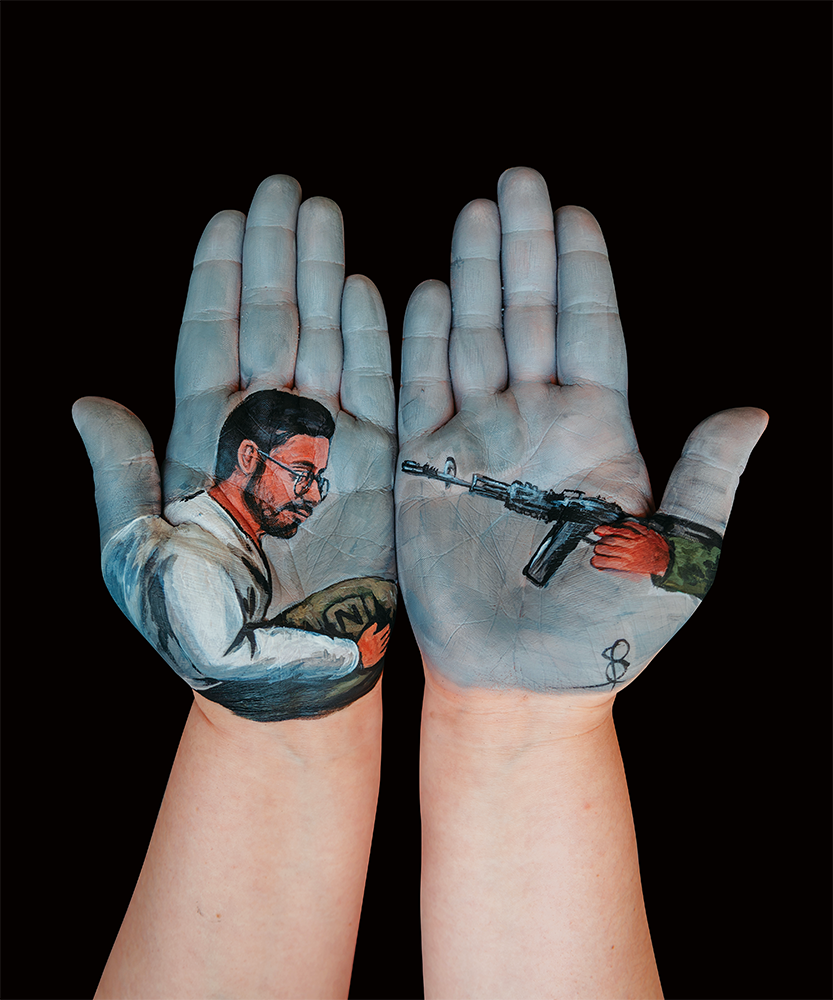
At the heart of the Forum is the exhibition Memory Bridges. This transnational artistic project reimagines Roma history and resilience through youth voices, creative activism, and digital storytelling.
The exhibition uses palms as symbolic canvases. For centuries, Roma have been stereotyped through fortune-telling tropes. Here, this imagery is reclaimed: Roma youth literally inscribe stories of survival, loss, and hope onto their hands. Each palm drawing becomes a testimony — transforming stigma into a medium of memory, truth-telling, and resistance.
Main Elements:
Interactive Art Installation – Large-scale reproductions of palm drawings (1m x 1.2m panels) paired with survivor and refugee testimonies. Each artwork is complemented by a QR code that links to extended digital stories.
Documentary Art Film – Following Roma youth as they listen to testimonies, sketch memories, and create palm drawings, interwoven with survivor voices. This cinematic narrative highlights the transformation of memory through lived experience.
Digital Platform – An online version of the exhibition with testimonies, educational resources, and access to the DROMA Digital Archive.
Integration into Long-Term Archive – All testimonies and artworks will be safeguarded in the open-access DROMA archive, ensuring sustainability beyond the event.
The exhibition will be presented as part of the Forum opening day with a vernissage, guided tour, and cultural program.
3. Panel Discussions
Day 1: “The Beginning of the Road: From Silence to Agency”
Theme: From post-war silence about the Roma genocide to the first initiatives of the 1990s for collecting testimonies, establishing archives, and creating Roma NGOs.
Goals:
To show how memory transformed from silence into a driver of civil society.
To trace the foundation of the Roma youth movement back to memory work.
To place the Ukrainian experience into a wider European context.
Speakers include: EVZ Foundation, Emran Elmazi, Artur Ivanenko, Tetiana Storozhko, Vira Dranhoi, Anna Mirga-Kruszelnicka, and potentially Kondur Daniel.
Key Message: Memory is the start of the movement.
Day 2: “The Turn of the Road: Between Two Wars”
Theme: How the war in Ukraine has created a new “living memory” through the testimonies of young Roma refugees. How displacement, solidarity, and women’s leadership influence activism.
Goals:
To highlight refugees as not only recipients of aid but also agents of change.
To show new formats of living memory (oral testimonies, micro-archives, media diaries).
To explain how solidarity networks across Europe support Roma youth.
Speakers include: Dr. Elżbieta Mirga-Wójtowicz, Mustafa Jakupov (MIA), Atanas Stoyanov, Kostiantyn Rota, Merjan Jakupov, Mihai Oancea.
Key Message: Memory is the bridge between generations and wars.
4. Additional Components of the Forum
DROMA Digital Archive: An open-access archive with testimonies, documents, and videos about Roma history and civil society.
Graphic Novels:
Guardian of Memory: Luma — A graphic story where a mythical spirit guides a young researcher through Roma genocide testimonies and activism.
Memory Guardians: Ivan Bilashchenko — An illustrated biography of a Roma survivor of the Holodomor, genocide, and WWII.
“10 Powers” Youth Guide: A practical empowerment tool for Roma youth, translating the Council of Europe Recommendation CM/Rec(2023)4 into accessible storytelling and infographics.
Ambassadors of Memory (Youth-Created Outputs): Five short educational videos, five local follow-up workshops, and a methodological guide on Roma history and Holocaust remembrance.
Open Space with Interactive Stations: Visitors will move between different stations (archive website, graphic novels, youth coalition projects, exhibitions from ternYpe, etc.), each offering an interactive format.
5. Cultural and Networking Program
In addition to panels and exhibitions, the Forum will host a cultural evening program, guided exhibition tours, and informal networking sessions. The idea is to create not only a space for dialogue but also for building personal and institutional connections.
6. Why This Matters
The Forum and the Memory Bridges exhibition aim to demonstrate that memory is not only about the past. It is also a tool for solidarity, empowerment, and social change. By combining oral history, contemporary refugee testimonies, youth-created art, and digital storytelling, we highlight the continuity of Roma struggles across generations — and the potential of memory to inspire agency in the present.
Prinzenstraße 84.2 OG 3
- 30.10.2025 13:00 – 18:00 Uhr
- 31.10.2025 12:00 – 18:00 Uhr
